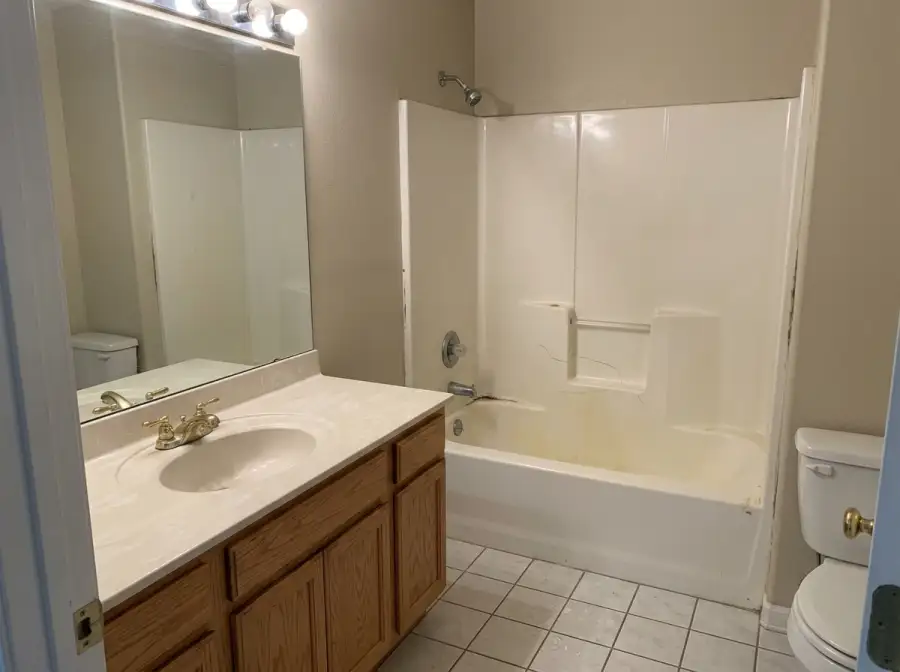
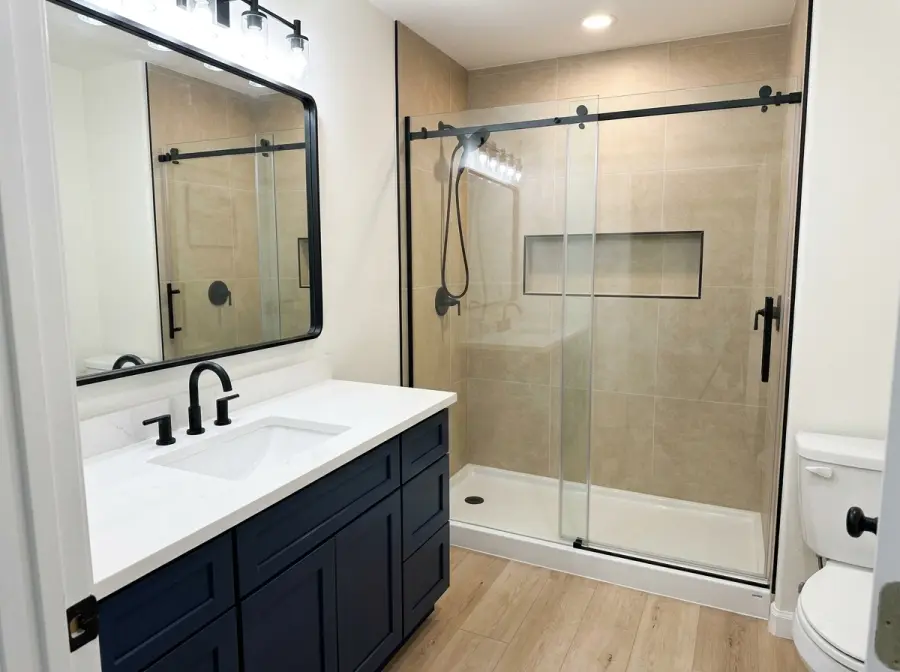
How we build a shower
There's no secret, just an order of operations we don't skip. Demo to the
studs so the framing and subfloor get looked at, not guessed at. New
cement backer board — never green drywall in a wet area. A waterproofing
membrane over the whole wet zone, brand and method named in your quote.
A pre-sloped pan under a properly set drain. Then, and only then, tile.
That order is boring on purpose. Every early shower failure we've ever
opened up skipped or rushed one of those steps. The tile is the last hour
of the movie; the plot happens behind it.
Tub-to-shower conversions
If the tub in your hall bath sees more storage than bathing, converting
it is the highest-value single change in remodeling. The drain moves, the
framing gets corrected, and a tiled 32×48 or 36×60 walk-in takes its
place — about a week of work, typically. Keep one tub in the house if you
can; the small bathroom page covers
the resale angle honestly.
Hard water and your new shower
Treasure Valley water runs hard — 6 to 15 grains per gallon depending on
where you are in the valley. On a new shower that means three practical
choices: coated glass (scale wipes off instead of etching in), matte or
brushed fixtures over polished chrome, and larger-format tile with
tighter grout lines so there's simply less grout to keep white. None of
this shows up in a showroom; all of it shows up two years into ownership.
Glass, plainly
Glass is the line item people underestimate, so here's the menu without
the showroom fog. A framed slider is the budget pick and looks like a
rental. A semi-frameless slider — thin frame, cleaner lines — is the
value pick for most conversions. Frameless euro glass, hinged or sliding,
is a meaningful line item all by itself and it's what makes a shower
photograph like the ones above. On curbless entries we lean toward a
single fixed panel with an open walkway: nothing to squeegee tracks on,
nothing to break, and the room reads twice its size.
| Enclosure | How it reads | Cleaning | Best for |
|---|
| Framed slider | Metal on every edge; looks like a rental | Tracks trap grime and need a brush | Landlords, quick refreshes |
| Semi-frameless slider | Thin top and bottom rail, clean lines | One shallow track to wipe | Most tub-to-shower conversions |
| Frameless euro, hinged or sliding | Glass and hardware only; the showroom look | Squeegee, nothing to catch dirt | A house you're staying in |
| Single fixed panel | Open walkway, room reads twice the size | Least to clean of any option | Curbless and accessible builds |
Whatever tier you pick, in this valley get the coating. Uncoated glass in
hard water etches to permanent fog in a couple of years, and no cleaner
brings it back. Coated glass plus a cheap squeegee on a hook is the
difference between a five-minute Saturday wipe and re-buying your glass.
Curbless and accessible showers
A curbless entry — no step, floor flowing straight in — is the best thing
you can build for accessibility and staying in your house as knees age, and
it happens to look like a high-end hotel. Single-level Bench and West Boise ranches
take to it naturally since there's usually room to recess the pan.
Grab-bar blocking goes into every shower wall we build whether you want
bars today or not; wood in the wall is cheap, opening tile later isn't.
Living with it — the boring manual
A tiled shower doesn't ask for much, but it asks. Run the fan during and
twenty minutes after — we wire them on timers for exactly this reason.
Squeegee the glass. Once a year, look at the silicone joints where tile
meets pan and tub meets wall; when the bead pulls or darkens, it's a
cheap fix that prevents an expensive one. The grout we use is sealed and
the membrane behind it doesn't care either way — but caulk joints are
wear items in every shower ever built, ours included. We tell every client
this at walkthrough; now it's in writing.
Shower questions, answered plainly
Should I get a tiled shower or an acrylic liner system?
A liner over a sound wall is a legitimate budget option and the one-day franchises install them competently. Our problem is what liners hide: you can't inspect a wall you're covering, and we've torn out too many liners with black rot behind them. We only build tiled showers over new backer and membrane — it costs more and there's no argument about what's behind it, because we put it there.
How long am I without a shower during a remodel?
Five to eight working days for a straight wet-area job. We sequence it so the demo-to-waterproofed stretch is as short as we can make it, and you'll know the showerless days before we start, not after.
What is a curbless shower and is it worth it?
The floor runs straight into the shower with no step — the pan is recessed into the framing. It looks clean, it's the safest thing you can put in a bathroom for anyone with mobility in mind, and it's easier to do during a full remodel than to retrofit. It costs a bit more in labor because the slope work is exacting. On single-level Bench ranches it's a natural fit.
Why is my fiberglass shower insert cracking?
Age and flex. Builder-grade one-piece units from the 90s sit on foam pads that compress; the floor flexes, the acrylic fatigues, and cracks start at the drain and soap ledge. A crack means water is getting somewhere you can't see. Don't caulk over it twice — by the second crack the subfloor conversation is usually already overdue.
Do you install walk-in tubs?
We can, as part of a full remodel — but we'll tell you honestly that most Boise clients who ask about a walk-in tub end up happier with a curbless walk-in shower instead. A walk-in tub still means stepping over a threshold and sitting while it fills and drains, which can be its own hazard; a curbless shower has no step at all and no wait. If a soaking tub matters to you for other reasons, we'll build the walk-in tub properly. If the goal is safety and ease, we'll say so.